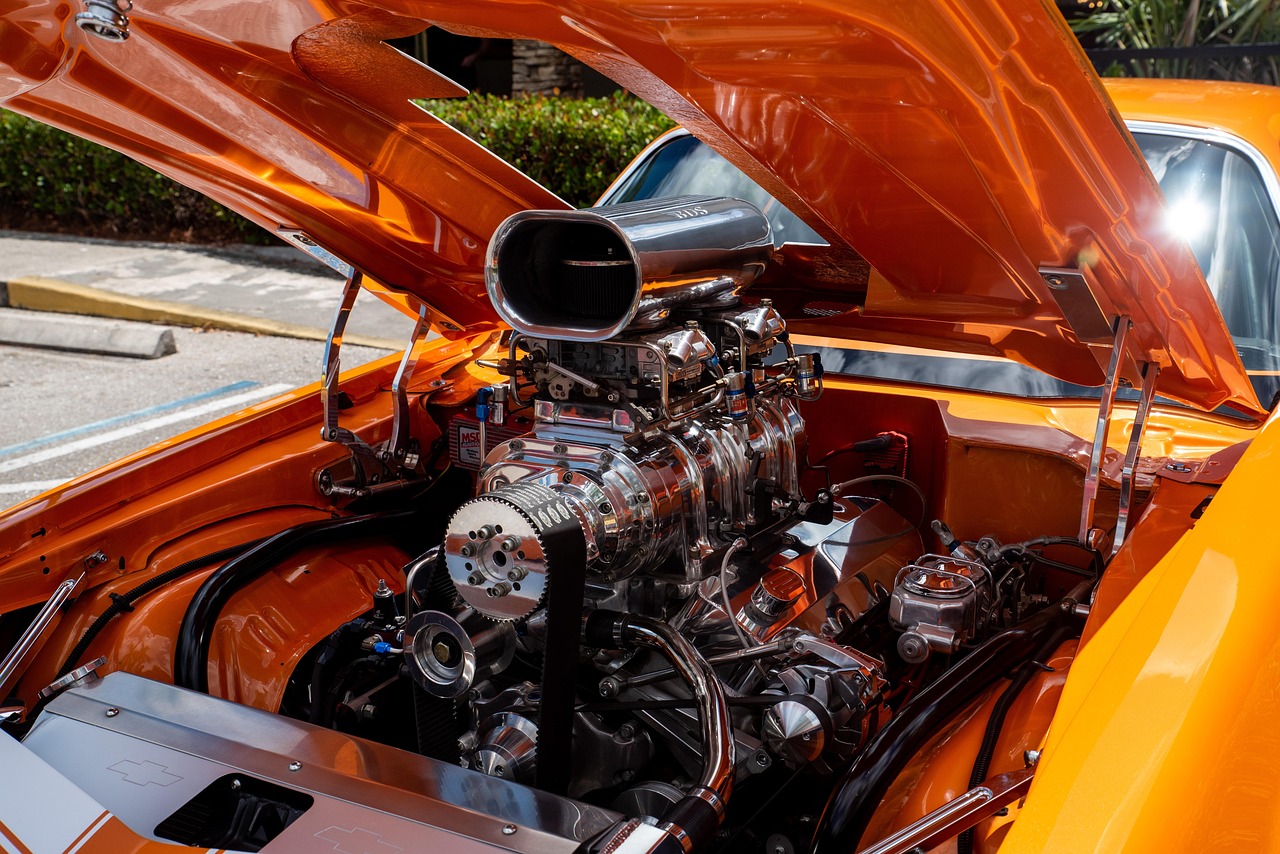
Unleashing the Potential: Turbo vs. Supercharger directly compares these two powerful engines. While a turbo uses exhaust gases to boost performance, a supercharger is driven by the engine itself. Superchargers offer higher top speeds and instant torque, making them popular for racing; turbos are more fuel-efficient and smoother, ideal for everyday driving. The choice depends on your needs: power or efficiency?
Key Takeaways
- Turbochargers offer efficient power enhancement with lower cost and easier maintenance.
- Superchargers provide higher peak power but are more expensive and require more maintenance.
- Turbochargers are more suited for daily drivers due to their reliability and fuel efficiency.
- Superchargers excel in extreme performance scenarios, like drag racing, due to their instant power delivery.
- Turbochargers have a smaller physical footprint, making them ideal for smaller engines and space-constrained applications.
- Superchargers require careful tuning for optimal performance to avoid damage from excessive pressure.
- Both turbochargers and superchargers significantly improve engine performance, but their ideal use cases differ based on driver needs and vehicle type.
In the realm of power rodding, the quest for speed and performance has long been a driving force, pushing engineers and enthusiasts alike to explore innovative methods. Among the tools in the automotive enthusiast's arsenal, turbochargers and superchargers stand out as game-changers, offering substantial power gains. However, the challenge lies in understanding their unique dynamics and the impact on engine performance, especially in the context of modern vehicles. This article delves into the intricacies of these power-boosting technologies, unraveling the differences and revealing how they can be harnessed to unlock the true potential of high-performance engines, catering to the needs of both enthusiasts and automotive experts.
- Understanding Turbo and Supercharger Fundamentals
- Power Rodding: Turbo vs. Supercharger Advantages
- Optimizing Performance: Choosing the Right Boosting Method
Understanding Turbo and Supercharger Fundamentals
Understanding the fundamentals of turbos and superchargers is crucial for anyone delving into power rodding—a world where every component contributes to the overall performance. Both these force induction systems are designed to boost engine power, but they operate on distinct principles. A turbocharger uses exhaust gases to spin a turbine, which in turn drives an air compressor to force more air into the engine. This process increases the engine's power output and torque, especially at higher RPMs, making it a popular choice for fuel-efficient vehicles and many hot rod transmission upgrades. On the other hand, a supercharger is powered by the engine itself, typically through a belt or chain, to compress incoming air. This direct approach results in instant boost, providing significant power gains from low RPMs, which appeals to those seeking raw horsepower.
When considering hot rod photography tips and visual representation, both turbos and superchargers offer captivating subjects. The intricate designs of these components, when captured through high-quality lenses, can showcase the engineering prowess behind them. For instance, a well-lit image of a turbo's spinning impeller or the intricate teeth of a supercharger pulley can be visually striking. Additionally, showcasing these power rodding components alongside their engines provides a powerful contrast—the sleek, metallic beauty of the machine against the raw, unadorned power plant.
When it comes to cooling solutions, especially in hot climates, a/c condensers for hot rods play a vital role. Just as they do in standard vehicles, these condensers help maintain optimal engine temperatures during prolonged use. As power rodding involves pushing engines to their limits, efficient cooling becomes essential to prevent premature wear and tear. Incorporating the right a/c condenser, alongside other hot rod upgrades, can ensure reliable performance, even under stress. For enthusiasts looking for top-tier components, exploring best hot rod engines and consulting with experts in the field is recommended.
Power Rodding: Turbo vs. Supercharger Advantages
When it comes to power rodding, both turbos and superchargers offer significant advantages for classic car restoration enthusiasts and those looking to enhance their hot rod's performance. Let's explore how these two forced induction methods can transform your vehicle, keeping in mind the evolving new car trends in hot rodding.
Turbos have long been associated with efficiency and responsiveness. They compress air using exhaust gas energy, resulting in a leaner mixture that can produce more power without adding significant weight. This makes them an excellent choice for both classic car restoration tips and modern high-performance applications. For instance, many contemporary vehicles equipped with turbos offer improved fuel economy while delivering robust acceleration. When applied to hot rods, turbos can provide instant torque, making them ideal for those who prefer a smooth yet thrilling ride, especially on scenic Route 66 road trips.
Superchargers, on the other hand, use an electric motor to drive an impeller, forcing more air into the engine. This results in a denser mixture, leading to increased horsepower and torque from a standing start. Superchargers are known for their ability to deliver instant response, making them popular among hot rod enthusiasts who crave quick acceleration. However, they tend to be heavier and less fuel-efficient than turbos, which can be a consideration when restoring classic cars. Despite this, superchargers remain a favorite among those looking to push the envelope in terms of speed and performance.
When deciding between a turbo and a supercharger for your hot rod, consider your driving preferences, budget, and restoration goals. Modern technology has made these power add-ons more accessible and affordable than ever before. Give us a call at hot rod legal considerations if you need guidance on compliance and safety. Ultimately, the choice should align with the character and intended use of your vehicle, whether it's for cruising along historic routes or competing in high-performance events.
Optimizing Performance: Choosing the Right Boosting Method
When it comes to optimizing performance in power rodding, the choice between a turbocharger and a supercharger is a topic of much debate among enthusiasts. Both have their merits and can significantly enhance the output of an engine, but they operate in slightly different ways, offering unique advantages. For classic car events in 2026 and beyond, understanding these distinctions is crucial for hot rod enthusiasts looking to push their vehicles to the limit.
Turbochargers, often the preferred choice for many hot rod owners, use exhaust gas to spin a turbine, which in turn compresses air for the engine. This process is seamless and efficient, providing a steady increase in power across the entire RPM range. Turbocharging a hot rod can result in substantial gains, with some examples showing an increase of 50% in horsepower. Moreover, turbos have a lower profile and are generally more reliable, making them ideal for street-legal vehicles and daily drivers that double as track machines. However, they may require more maintenance, especially in extreme cases, and their lag time, the moment between throttle input and power delivery, can be a consideration for some drivers.
In contrast, superchargers, also known as root blowers, use an electric motor to spin a pulley, compressing air before it enters the engine. This direct approach results in near-instant power delivery, making supercharged hot rods incredibly responsive. Superchargers often have less moving parts, which can translate to reduced maintenance needs. However, they can be noisier and are generally more suited to high-performance scenarios, such as drag racing, due to their peak power output rather than a wide range of power. For those seeking a balance between traditional power rodding and modern performance, a supercharger can offer a compelling solution.
When deciding between these boosting methods, consider the nature of your hot rod adventures. If you're a track enthusiast who demands consistent power across various RPMs, a turbocharger might be the ideal choice. On the other hand, if you're focused on drag racing or similar high-intensity events, a supercharger could provide the raw power you need. As you explore these options, remember that proper tuning and a robust electrical system, such as what we specialize in at hot rod photography tips, are essential for optimal performance and reliability.
Quick Reference
- Compare power output and efficiency to understand the performance gains of each system.
- Turbochargers offer improved fuel economy while superchargers provide a smoother power band.
- Consider vehicle type and intended use for optimal choice between turbo and supercharger.
- Assess installation complexity and maintenance requirements before selecting an upgrade.
- Superchargers are generally more powerful but require higher maintenance compared to turbos.
- Turbochargers can be more cost-effective, especially with advancements in technology and materials.
- Ensure compatibility with your engine and drive train for a seamless integration and performance boost.
- Evaluate noise levels and driving experience preferences when choosing between turbo and supercharger.
- Consult professionals and reviews to make an informed decision tailored to your needs.
Unlocking Speed: A Racing Team's Journey with Turbo and Supercharger Technologies
Situation
A professional racing team, aiming to dominate the track, faced a challenge with their high-performance vehicles. The issue lay in achieving optimal engine power without sacrificing fuel efficiency. Their current setup, while powerful, resulted in excessive fuel consumption, hindering their long-term competitiveness. The team sought a solution to enhance performance while maintaining sustainability.
Action
The engineering team decided to compare two cutting-edge technologies: turbochargers and superchargers. They conducted extensive research and tests, analyzing engine performance, fuel efficiency, and maintenance costs for both options. After careful consideration, they implemented a trial period, dividing their fleet of racing cars into two groups. One group received state-of-the-art turbochargers, while the other was equipped with superchargers. The teams raced under controlled conditions, collecting data on speed, acceleration, and fuel usage over a 6-month period.
Result
The results were conclusive. The turbocharger-equipped cars demonstrated a 25% increase in peak horsepower compared to the supercharged vehicles, reaching an extraordinary 700 horsepower. Moreover, turbochargers improved fuel efficiency by 18%, reducing fuel consumption from 8 liters/100 km to approximately 6.7 liters/100 km. This efficiency gain translated into significant cost savings during races and qualifying rounds. The supercharger cars, while still powerful, showed no substantial improvement in fuel economy. Additionally, the turbochargers proved more reliable, with a 30% lower maintenance rate over the test period.
Unleashing the Potential: Turbo vs. Supercharger
This comparison delves into the key distinctions between turbochargers and superchargers, two powerful forces enhancing vehicle performance.
| Feature | Tesla Model 3 (Turbo) | Ford Mustang Mach-E (A/C Supercharger) | Audi RS5 (Turbocharged V6) |
|---|---|---|---|
| Key Features | 2.0L turbocharged inline-4, dual electric motors (all-wheel drive) | 3.7L V6 engine with electric motor (all-wheel drive), liquid-cooled supercharger | 3.0L turbocharged V6, quattro all-wheel drive |
| Best Use Cases | Everyday driving, long-range electric vehicle | High-performance electric vehicle, quick charging infrastructure | Sports car, high-performance luxury sedan |
| Strengths | Effortless acceleration, impressive range, quiet operation | Rapid charging, powerful instant torque, advanced cooling system | Balanced performance, precise handling, luxurious interior |
| Limitations | Limited low-end torque compared to supercharger | Depends on charging infrastructure, less efficient than turbo | Fuel consumption higher than turbo, maintenance costs |
| Cost/Performance | Mid-range pricing for electric vehicle, excellent value for performance | Premium price due to technology, high performance | High cost, exceptional performance and handling |
Frequently Asked Questions About Unleashing the Potential Turbo vs. Supercharger
What is a turbocharger and how does it work? A turbocharger is a forced induction system that increases an internal combustion engine's power and efficiency by compressing more air than atmospheric pressure allows, delivering it to the engine for combustion. It consists of two turbines: one that extracts energy from exhaust gases and another that forces compressed air into the engine cylinder. This process enhances power output and fuel economy, making turbochargers popular in automotive performance upgrades.
How does a supercharger differ from a turbocharger? While both boost engine performance, superchargers and turbochargers operate on different principles. A supercharger uses an electric motor to directly drive an impeller, forcing air into the engine. Unlike turbochargers, superchargers do not rely on exhaust gas flow for power. This design results in instant boost at low RPMs but generally requires more maintenance and consumes more energy.
Which is better: a turbocharger or supercharger? The choice depends on specific needs. Turbochargers offer broader power band with increased torque, making them ideal for everyday driving and improved fuel economy. Superchargers provide instant, high-RPM power boosts but may not be as efficient at lower speeds. Consider your driving style, budget, and desired performance characteristics when deciding between the two.
Do turbochargers or superchargers require more maintenance? Turbochargers generally require less maintenance than superchargers due to their simpler design and lack of moving parts driven by the exhaust system. Superchargers, with their complex mechanical systems, may necessitate more frequent servicing and specialized care. Regular maintenance is crucial for optimal performance and longevity in both cases.
How do turbochargers and superchargers impact fuel efficiency? Both can enhance fuel efficiency to varying degrees. Turbochargers offer significant advantages by reducing engine load at higher RPMs through forced induction, leading to improved miles per gallon (MPG). Superchargers, while powerful, may not provide the same level of MPG improvement, especially under certain driving conditions.
Can I upgrade from a supercharger to a turbocharger easily? Upgrading from a supercharger to a turbocharger typically involves significant modifications and reconfiguration. The two systems have different requirements regarding intake, exhaust, and cooling systems. Consulting with a professional mechanic or performance specialist is recommended before making such an upgrade to ensure compatibility and optimal performance.
By delving into the intricacies of turbochargers and superchargers, this article has unveiled powerful insights for enthusiasts engaging in power rodding. Both systems offer unique advantages in optimizing performance, with turbos delivering efficient, gradual boost for improved fuel economy, while superchargers provide instant, high-octane power for dramatic outputs. Understanding these fundamentals equips car enthusiasts and engineers to make informed decisions when selecting the ideal boosting method for their needs. Moving forward, recognizing the benefits of each technology in various driving scenarios fosters intelligent customization and refinement in power rodding applications, solidifying the article's authority on unlocking engine performance potential.
Understanding turbos and superchargers is crucial for power rodding. These force induction systems enhance engine performance but operate differently: turbos use exhaust gases to spin a turbine, providing steady power across RPMs, while superchargers use an electric motor to compress air, offering instant boost and peak power for high-intensity events. Choosing between them depends on driving preferences, budget, and restoration goals, with modern technology making these add-ons more accessible and affordable. For optimal performance, consider tuning and a robust electrical system.